Saturday, November 21, 2009

Islam and Europe

It is clear that Islam has quite an effect on medieval Europe, is many different ways socially and politically. Many different things were brought back from the middle east to Europe that people there had never seen before, in quality and type of things. Many different spices, items and ideas came from the middle east.

The crusades created a constant demand for shipping and men to travel to and from the middle east to gather goods. The economy of many European countries benefited from the invasion and conquest of this area. Items from the middle east were so enchanting and captivating that there simply was not enough of it to satisfy as many Europeans that wanted such goods.

As for many of the Aristocrats and wealthy people who set out for the middle east in search of wealth and prosperity from these lands many of them never returned and the their land and belongings were granted to the kings and queens of these countries. this gave prominence back to many of the kings and queens of the European realm.

Many of the ideas and intellectual advancements of the time for Europe came from the middle eastern realm. The people of the East were far more intellectually advance than their western European brothers and many scientific ideologies were brought back to Europe with the crusaders.

http://www.middle-ages.org.uk/effects-of-crusades.htm

Surrender

The word Islam means “surrender, submission, or subjugation.” It is no surprise, then, that Muslim’s completely surrender themselves to their god, Allah. They are especially dedicated to Allah through five prayers that coincide with the five pillars. During these prayers, the Muslim’s submission to Allah is made clear by their posture, which involves a bent back as if to say they are not free, but a slave. Each Muslim believes he is on earth to worship and serve the one who created him.


Muslims serve Allah in hopes of receiving a gift from him in return. They recite prayers and obey his commands in order to receive earthly or heavenly rewards. The most precious gift they can receive is eternal salvation, which Allah has already given them. Therefore, they behave self righteously to achieve many good deeds and Allah’s grace.

In Islam, prayer to Allah is not voluntary, but rather an obligation. Many different regulations have been enforced in order to ensure Allah is the center of everything. For example, it is mandatory that everyone washes their hands, feet, arms, mouth, and face before prayer. This law is enforced to create a sense of purity in the mosques, and anyone who does not oblige to the rule has nullified their prayer.

One main prayer in Islam is “guide us in the straight path, the path of those whom thou hast blessed, not of those against whom thou are wrathful, nor of those who are astray.” This particular prayer expresses a Muslim’s dependency on Allah. Each Muslim frequently calls out to their god in prayer, and desires to serve him and fight for him wholeheartedly.


This website is especially helpful in understanding a Muslim's relationship to Allah:

http://www.light-of-life.com/eng/gospel/g4105efm.htm

Friday, November 20, 2009

Richard the Lionhearted Encounters Saladin

The Third Crusade although unsuccessful, helped ease tensions between western European Christians and Eastern Muslims. It secured a truce and ensured Christians would be allowed to make their pilgrimages to Jerusalem. As a side story two kings showed each other chivalrous mutual respect.

Richard the Lionheart king of England raised money through taxes and assembled an army with the help and support of France to retake Jerusalem from Saladin and the Muslims. “The two most significant remaining leaders to set out on crusade from the West were Richard of England and Philip of France, who set out by sea separately in 1191. Richard stopped at Cyprus on his way to the Holy Land and conquered the island before meeting up with Philip at the siege of Acre on 8 June 1191. Saladin was unable to break the Christians' blockade, and the city fell to the crusading kings in a little over a month, after which Philip departed to return to the West and Richard turned south toward Jaffa.” During the march on 7 September 1191, Saladin attacked the crusaders on the plains near Jaffa, but he suffered a heavy loss. Richard was then able to take Jaffa, and secure the use of its port. Soon after Saladin tried to retake Jaffa but was unsuccessful.

“However, Saladin's relationship with Richard was one of chivalrous mutual respect as well as military rivalry. When Richard became ill with fever, Saladin offered the services of his personal physician. Saladin also sent him fresh fruit with snow, to chill the drink, as treatment. At Arsuf, when Richard lost his horse, Saladin sent him two replacements. Richard suggested to Saladin that Palestine, Christian and Muslim, could be united through the marriage of his sister Joan of England, Queen of Sicily to Saladin's brother, and that Jerusalem could be their wedding gift.”

Soon after the two commanders agreed on a three year truce. King Richard returned to home to England and shortly after Saladin in 1193. The Third Crusade failed to recapture Jerusalem, but it did secure the coastline from Jaffa to Tyre, creating a point from which future crusades could be launched.


1 Lawson, Rich. Richard and Saladin: Warriors of the Third Crusade
2 Lawson, Rich. Richard and Saladin: Warriors of the Third Crusade
found at http://www.shadowedrealm.com/articles/exclusive/richard_saladin_warriors_third_crusade
Wednesday, November 18, 2009

Expansion of the Islamic/Arab Empire

Although Muhamed was able to greatly spread the message of Islam, it was not until after his death in 632 CE that the real expansion of the Arab Empire began. Only a few years after the death of Muhamed the Arab armies began to engage the Byzantine and Persian Sassanid Empires, which were the most powerful empires of the region, in battle. These engagements were a continuation of a long tradition of tribal raids into surrounding civilizations. These raids had taken place long before Muhamed and Islam were around. The difference now was that they finally had a centralized state of their own and a central command which could mobilize the military potential of the entire Arab nation. The Arabs were able to use this new found power to attack the Byzantine and Persian Empires, which were weakend from decades 0f war against each other. During the 650s the Arabs were finally able to defeat the Sassanid Empire and while they were not able to completely defeat the Byzantines, they were able to capture the southern half of Byzantium.


After defeating these two great empires the Arabs, who now operated on both land and sea, were able to sweep westward across North Africa. By the early 700s CE the had conquered Spain and had begun to attack southern France. Besides this great expansion west the Arabs army also moved east toward the Indus. Along the way they were able to capture some of the major oases towns of Central Asia. In 751CE the Arab Empire battle Chinese forces in the Battle of Talas River and were able to deal the Chinese a crushing defeat. This battle would have a major effect on the cultural evolution of Asia, as it halted the expansion of China to the west. It also helped to convert the Central Asian Turkic speaking people to Islam. This great expansion was important for multiple reasons. It was obviously important for great religous effect that it had, massively expanding Islam to both the east and west, but it was also important because of the effect that it had on Arab trade. During this expansion the Arab Empire was able to capture to capture profitable trade routes, as well as wealthy agricultural regions, both of which were able to greatly increase the wealth of the Islamic community.

Strayer, Robert W. Ways of the World. Vol. 1. Boston: Bedford/ St. Martin's, 2009. 2 vols. Print.
http://books.google.com/books?id=mBuaPAAACAAJ&dq=ways+of+the+world+strayer&ei=0Tj7Su_vK46OMoSi_YQP

Sunday, November 15, 2009


Western Christendom’s face was the Byzantine Empire. It was the eastern half of the Roman Empire that still remained. Byzantine was based at Constantinople, which is modern day Istanbul, Turkey. The empire was in a war against the Muslim people of the Middle East. The Byzantines were in existence for over 1,000 years, and their empire ended because of the Ottomans. The Byzantines had one of the finest navies of the time, and they were able to repulse the Muslim’s from gaining ground and breaking through their massive walls. This would not last forever though, as the Ottoman Empire united the Muslim people and were able to make a full out attack. The city finally fell in the mid 1400’s, and the Roman Empire fell with it. It was a severe defeat for Christianity and they would repay the Muslims at the Battle of Lepanto. This battle helped to stop the spread of Islam across Europe, and gave people a choice of which religion was right for them. This holds true to what the United States of America was founded upon, and what we still believe today.

Saturday, November 14, 2009

Uh oh, it is spreading!


One of the biggest influences in the modern world still today is religion. It has been said for years that there should be a separation of church and state, however religion still determines many of the decisions made globally today. One of the largest religions on Earth today is Christianity, and a major question is what factors and mechanisms helped this religion spread and grow to what it is today.

Global trade, with the establishment of the silk road and other trade networks. was one of the biggest influences in the spread of all religions as well as Christianity. With these established routes people of the Christian faith, such as missionaries, could travel great distances spreading the word of their religions to regions of the world that were not as easily accessible before. Not just missionaries but even merchants and anyone really was able to help spread the word of religion.

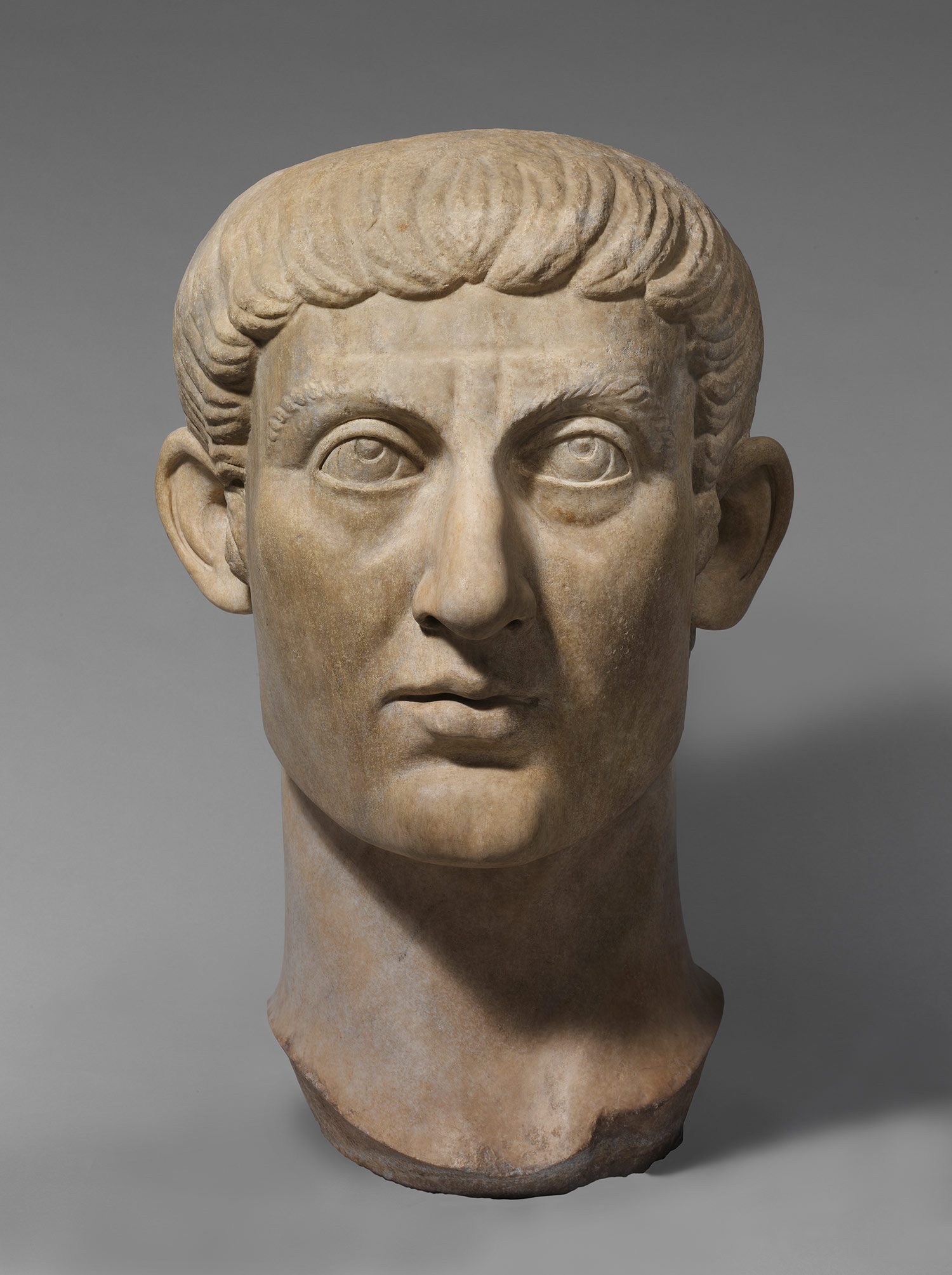
When the ruler of the entire Roman empire converts to Christianity it is going to make the idea of this religion a bit more popular. When Constantine converted to Christianity it made Christianity much more popular within the empire, and had one of the biggest impacts on the religion still today.

Christianity was appealing in many ways to simple people as well. The idea of salvation was a huge factor in the conversion of so many. Normal people, not rulers, aristocrats or any other elite class was able to reach salvation through this faith which compelled so many. Such a simple route to salvation would be very appealing to many.

http://mr_sedivy.tripod.com/r_life.html

Caesaropapism.

In history and the rise off the Christan church, there would be a time a great trial and great struggle against either different people or different groups. In the beginnings of the Church communication took a long time. For example, to send a message from Constantinople to Rome would take numerous of weeks. An important message pertaining to church issues could takes weeks to get to its destination and it might be too late when the message arrives. Important matters such as church or civic would come too late to do anything about the matter. When the Church was beginning, the Christians were spread throughout the empire and at times they believed different things that they were calling Christian but were in reality not. At the time in history, the Church and State were not separated, thus it created chaos between who was to control what.
At times civic leaders would make Church decisions which is classified as caesaropapism. Caesaropapism was originally created in the Byzantine Empire in its efforts to combine the Eastern Orthodox Church and the Emperor under one throne. Other cases of caesaropapism have came up past the years of the Roman Empire's fall. In Medieval times, the Church and State were not separated. Taxes would go to the Church as well as the government. Examples would be King Henry VIII taking over the Church in England.
www. encyclopedia. com